
A supercar detailing service is not simply a more expensive wash for a more expensive vehicle. Supercars combine complex paint finishes, low bodywork, intricate wheels, heat-exposed areas and materials that need informed handling. The objective is to improve the car’s appearance without taking unnecessary risks, while applying protection that makes ongoing care more manageable.
For owners who expect their vehicle to look as special when it is parked as it feels on the road, the difference is in the preparation. Every surface should be assessed, cleaned and treated according to its condition, material and use. That is where professional detailing earns its value.
Why supercars require a different approach
A supercar’s paintwork is often its most striking feature, but it is also exposed to the same contaminants as any other vehicle. Bird droppings, insect residue, brake dust, road film, tree sap and airborne fallout can quickly affect gloss and surface condition. With low front ends and wide arches, these cars are especially prone to contamination in areas that are awkward to access.
There is also little room for a rushed process. Aggressive washing, unsuitable chemicals or poor drying methods can introduce fine scratches and swirl marks. On dark colours and high-gloss finishes, these defects become highly visible in direct sunlight or under showroom lighting. A professional service works methodically, using suitable products, clean equipment and controlled techniques to preserve the finish rather than merely make it look clean for the day.
The correct approach also depends on the individual car. A regularly driven supercar used in all seasons needs a different protection plan from a low-mileage weekend car. A classic performance vehicle may have more delicate paint or trim than a newer model with modern clear coat. Detailing should be tailored to the vehicle in front of the specialist, not selected from a one-size-fits-all menu.
What a professional supercar detailing service includes
The process begins with an inspection. This identifies the visible condition of the paintwork, wheels, glass, interior surfaces and exterior trim. It also helps establish realistic expectations. Some marks may be light surface marring that can be reduced through paint correction, while deeper stone chips, scratches or lacquer damage may need precision touch-up work or a different repair solution.
Careful exterior cleansing
A safe wash is the foundation of any quality service. The vehicle should be pre-cleaned to loosen traffic film and contamination before contact washing begins. Wheels, tyres, wheel arches and brake components require particular attention, as performance vehicles can accumulate significant brake dust in a short distance.
Panel gaps, badges, grilles, fuel filler areas and lower sections are cleaned with care, as these areas often hold residue that detracts from an otherwise excellent finish. Thorough drying matters just as much. Water left around mirrors, vents, badges and panel lines can run onto freshly detailed paintwork and leave mineral marks.
Paint decontamination and correction
Even a car that appears clean can have bonded contamination on its paintwork. This can leave surfaces feeling rough, dull the finish and interfere with the performance of a protective coating. Decontamination removes this embedded residue so the paint is properly prepared.
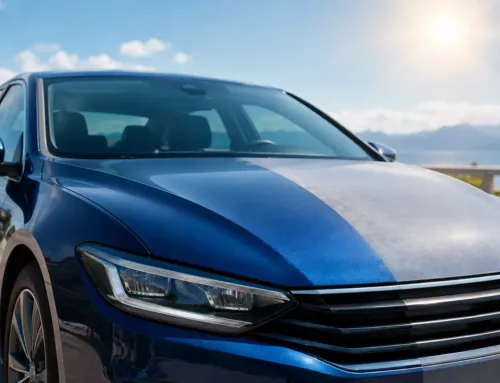
Paint correction is then considered where needed. This is the measured polishing process used to reduce swirl marks, wash marring, light scratches and oxidation, improving clarity and gloss. It is not about polishing every car as heavily as possible. The right level of correction balances visible improvement with the long-term preservation of the paint system.
For a newer car, a light enhancement may be sufficient to refine the finish before protection. For a vehicle with more noticeable defects, a more involved correction may be appropriate. An experienced detailer will explain the likely result before work begins, particularly where deeper scratches cannot be safely removed in full.
Protection chosen for the car’s use
Once the paintwork is clean and refined, it needs suitable protection. A ceramic coating can provide a durable protective layer that enhances gloss and helps reduce the impact of environmental contamination. It can make the vehicle easier to maintain by improving water behaviour and reducing how strongly dirt adheres to treated surfaces.
However, ceramic coating is not a substitute for careful washing or regular upkeep, and it does not make paintwork completely scratch-proof. It is most effective when applied to properly prepared paint and maintained with appropriate care. The best choice depends on how the vehicle is stored, driven and cleaned, as well as the owner’s expectations for appearance and maintenance.
Protection can also be applied to wheels, glass, exterior trim and other appropriate surfaces. Treating these areas supports a more consistent finish across the vehicle, rather than focusing only on the bonnet and doors.
Interior detailing without over-treatment
A supercar interior often includes fine leather, Alcantara, carbon fibre, piano-black trim and detailed switchgear. These materials need a restrained, material-specific approach. The aim is a clean, fresh cabin that retains its original character, not a heavily dressed interior with artificial shine.
Professional interior detailing addresses dust in vents and seams, light soiling on upholstery, fingerprints on trim and debris in difficult-to-reach areas. Careful attention here protects the ownership experience as much as the exterior finish. The steering wheel, seats and controls are the surfaces you see and touch on every drive.
When should a supercar be detailed?
There is no fixed interval that suits every owner. A car used frequently on Hampshire and Dorset roads may benefit from more regular maintenance than one kept in a garage and driven only in dry conditions. Seasonal changes are also relevant. Winter road grime, wet weather, pollen and summer insect residue all place different demands on exterior protection.
Many owners choose a more comprehensive detail when acquiring a vehicle, after a period of reduced maintenance, before a show or event, or before selling. A well-presented car photographs better, feels better cared for and gives potential buyers confidence in its overall condition. For cars retained long term, periodic detailing is a practical way to preserve the visual standard that made the vehicle special in the first place.
Questions to ask before booking
The right service should feel clear, not complicated. Ask how the vehicle will be assessed, what preparation is included, whether paint correction is recommended, and which protection is suitable for your driving and storage habits. It is also sensible to ask what visible improvement can realistically be expected from existing scratches, stone chips or worn areas.
Convenience matters too. For owners in New Milton, Lymington, Christchurch, Highcliffe, the New Forest and surrounding areas, a specialist who can explain the work plainly and arrange a suitable appointment removes much of the friction from looking after a high-value vehicle. The service should be professional from the first conversation through to the final handover.
At X Studio Car, the focus is on quality services, exceptional efficiency and a finish tailored to the condition and significance of the vehicle. Every recommendation should have a clear purpose, whether that is restoring paint clarity, protecting a refined finish or bringing the cabin back to a standard that matches the exterior.
A supercar is built to create an impression long before the engine starts. Give its paintwork, wheels and interior the same considered attention that its engineering receives, and every journey can begin with the vehicle looking exactly as it should.