
A scratch can look minor in the morning and become the only thing you notice every time you approach the car. The best car scratch repair methods are not about applying the quickest product to the panel. They depend on how deep the damage is, where it sits, the paint type and the standard of finish you expect once the work is complete.
For a daily vehicle, a well-corrected panel restores pride in ownership and helps the car continue to look cared for. For a prestige, classic or performance vehicle, the wrong approach can leave mismatched colour, dull patches or visible repair marks. A proper assessment protects both the appearance and the long-term condition of the paintwork.
Start with the depth of the scratch
Modern vehicle paint is usually built in layers: primer, colour coat and a clear protective coat on top. Light swirls, wash marks and fine scratches often affect only the clear coat. These can alter the way light reflects from the surface, making otherwise glossy paint appear tired or hazy.
A scratch that catches a fingernail may be deeper, although this is not a complete diagnosis on its own. If the colour beneath the clear coat is visible, or if bare metal, plastic or primer can be seen, polishing alone will not make the damage disappear. The correct method then becomes one of careful paint build-up, localised repair or repainting, depending on the severity and panel involved.
Location matters too. A mark along a flat door skin can often be corrected with excellent visual consistency. Damage on an edge, crease, bumper corner or beneath a door handle needs more care because these areas are exposed, highly visible and easy to overwork.
Best car scratch repair methods, matched to damage
Paint correction for light scratches and swirl marks
Professional machine polishing is usually the strongest option for superficial scratches, wash marring, light scuffs and dull paint. The process uses carefully selected polishing compounds and pads to refine a very small amount of the clear coat, levelling the surface around the defect so it reflects light more evenly.
This is why a good correction is more involved than a quick polish. Paint thickness, panel shape, paint hardness and previous repairs all affect what can safely be achieved. Some paints respond quickly; others require a more measured approach to avoid unnecessary removal of clear coat.
A single-stage enhancement may noticeably improve gloss and reduce lighter defects. More involved paint correction can improve deeper clear-coat marks and produce greater clarity, particularly on dark colours where every imperfection shows. However, not every scratch should be chased until it is entirely invisible. Preserving healthy paint is often the better long-term decision, especially on older or previously corrected vehicles.
Precision paint touch-ups for chips and deeper marks
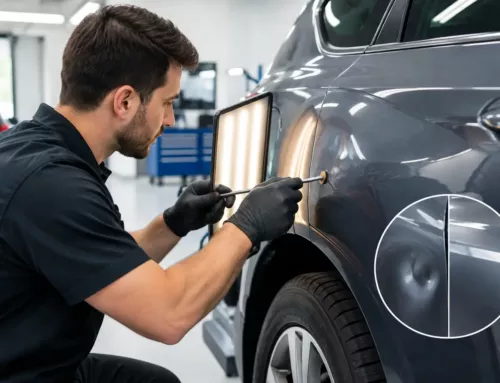
When a scratch has passed through the clear coat, a precision touch-up can be the most sensible repair. Rather than attempting to polish away damage that is physically below the surrounding surface, colour-matched paint is carefully applied to rebuild the affected area.
The quality lies in preparation, colour selection and restraint. Excess paint, rushed application or poor levelling can leave a raised blob that catches the eye just as much as the original chip. A considered touch-up is designed to reduce the visibility of the defect, protect the exposed area and retain as much original paint as possible.
This approach is particularly useful for small stone chips on bonnets, marks around door edges and isolated scratches where a full repaint would be disproportionate. On metallic and pearl finishes, expectations should remain realistic. These colours contain flakes or pigments that can be difficult to replicate perfectly in a tiny local repair, especially under direct sunlight.
Localised repainting for damage beyond correction
Some scratches are too deep or too extensive for detailing-led methods. If the damage exposes metal, affects a large area, has begun to corrode or includes a dent, a properly prepared repaint may be required. This is also the right route where previous touch-ups have failed or the panel has been damaged through multiple paint layers.
A bodywork repair can deliver the most complete result in these cases, but it introduces different considerations. Colour matching, blending into adjoining panels and curing time all influence the final outcome. A professional inspection should establish whether paint correction and touch-up work can provide the right result, or whether repainting is the more durable choice.
Ceramic coating after the repair
Once the paint has been corrected or touch-ups have fully cured as appropriate, a ceramic coating can help maintain the finish. It adds a durable protective layer that improves water behaviour, makes routine washing easier and offers resistance to everyday contamination such as bird droppings, road film and tree residue.
Ceramic coating is not scratch-proof, and it cannot prevent every mark from poor washing, tight parking spaces or gravel roads. Its value is in making the paint easier to maintain while supporting the depth and gloss created by the correction work underneath. Protection performs best when it is applied to properly prepared paint, not used to mask unresolved defects.
Why scratch removers are not a universal answer
Off-the-shelf scratch products often promise simple results, but their effectiveness depends entirely on the type of damage. Some contain fillers that temporarily disguise fine marks by changing how light passes across the surface. Once the vehicle is washed several times, the scratches may be visible again.
More abrasive products can improve light defects when used with the correct technique, but there is little margin for error on modern clear coat. Uneven pressure, contaminated applicators or repeated use in one area can create hazing, dullness or additional marring. Deep scratches cannot be safely polished away simply by using a stronger compound.
For owners who want an exceptional finish rather than a short-lived improvement, inspection before treatment is the more efficient route. It avoids spending time on a product that cannot address the actual depth of the damage.
What a professional assessment should consider
A high-standard scratch repair begins under proper lighting. Sunlight may reveal some defects, but focused inspection lighting shows the full extent of swirls, sanding marks, buffer trails and isolated scratches. The vehicle should also be clean before judging the paint, as road film can hide or imitate damage.
The assessment should consider whether the panel has been repainted before, how much correction is sensible, whether the scratch has sharp edges, and how the repair will look from normal viewing distance. The desired outcome matters as well. A family SUV used daily may need a substantial visual improvement and durable protection. A cherished classic or supercar may justify a more detailed correction process focused on preserving original paint.
At X Studio Car, this is approached as more than removing a mark. The aim is to select the quality service that suits the vehicle’s condition, use the least invasive effective method and leave the surrounding paintwork with a consistent, refined finish.
Keeping repaired paintwork looking its best
After repair, gentle maintenance makes a visible difference. Safe washing methods, clean wash media and prompt removal of bird droppings or tree sap reduce the chance of fresh marring and contamination sitting on the surface. Avoid treating a repaired area as indestructible simply because it now looks new.
If the vehicle is regularly parked in busy car parks, used on rural roads or driven through coastal conditions around Hampshire and Dorset, periodic inspections can identify new chips before they become more noticeable. Protective treatments and considered upkeep will not eliminate wear, but they can make ownership far more manageable.
The right repair is the one that respects the paint already on the car while delivering a finish you are pleased to see every time it is clean. If a scratch is bothering you, a professional assessment can turn uncertainty into a clear, practical plan for restoring the panel properly.