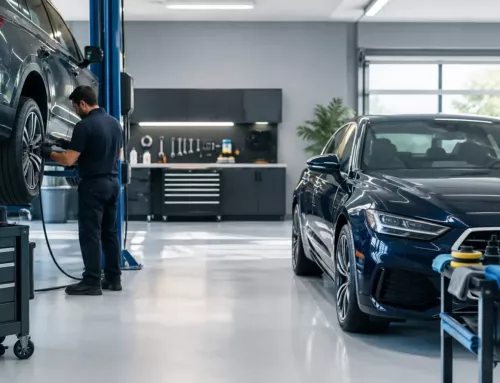

A dent can change the whole impression of a car. Even when the paint has not broken, a shallow crease across a door or a small impact on a wing catches the light differently and makes an otherwise well-kept vehicle look neglected. Professional dent repair is about more than pushing metal back into place. The right approach protects the original finish where possible, restores clean body lines and prepares the surface for the level of detailing it deserves.
For owners in New Milton and across Hampshire and Dorset, the best repair method depends on the dent itself, the condition of the paint and the panel involved. A close inspection is always more valuable than a quick judgement from a photograph.
What determines the right dent repair method?
A dent is not defined only by its size. Its position, depth and the way the metal has stretched all affect whether it can be repaired without refinishing. The same applies to the coating already on the vehicle. Modern paint systems are flexible, but a sharp impact can still fracture the clear coat or leave damage that is not obvious until the panel is viewed under proper lighting.
Paintless dent repair is often the preferred route when the paintwork remains intact. A skilled technician gradually manipulates the panel from behind, or uses controlled pulling methods from the outside, to return the metal to its original profile. There is no filler, colour matching or repainting when the repair is suitable, which helps retain the factory finish.
That does not mean paintless repair is the answer to every dent. A deep impact, an exposed edge, a heavily stretched panel or a crease with damaged paint may require a different process. In these cases, attempting to force the metal back can create distortion, stress the paint or leave a result that remains visible in daylight.
When paintless dent repair can be a strong option
Small parking dents are common on doors and rear quarters, particularly where another car door has made contact. If the affected area is accessible and the paint has not chipped or cracked, paintless repair can achieve an exceptionally tidy result.
It is particularly effective for rounded, shallow damage rather than a sharply folded crease. The location matters too. Flat and gently curved areas often allow better access than a dent beside a wheel arch, at the edge of a panel or behind reinforced sections. Aluminium panels can also be repaired, although they behave differently from steel and demand the correct experience and equipment.
The appeal is clear: preserving original paint protects the uniformity of the vehicle’s finish. It also avoids the risk of an imperfect colour blend on metallic, pearl or older paintwork. For prestige, classic and enthusiast-owned vehicles, retaining as much factory material as possible is often a priority.
When dent repair needs paintwork attention
If the impact has removed paint, marked the primer or cracked the clear coat, restoring the panel’s shape is only one part of the job. The exposed area needs appropriate treatment to prevent moisture from reaching the metal and causing corrosion. A dent may look minor initially, but damage around its centre or along a sharp ridge can develop into a much more noticeable issue if left untreated.
Some panels also reveal prior repairs once work begins. Filler, old paintwork, previous corrosion or inconsistent panel thickness can affect what is sensible and safe. This is why a professional assessment should be honest about the likely finish rather than promising that every mark can disappear completely.
Where the body shape has been restored and the remaining issue is light surface marring, paint correction may improve the appearance considerably. Correction can reduce or remove fine scratches, haze and dullness in the clear coat, bringing clarity and gloss back to the surrounding panel. It cannot, however, replace missing paint or repair a crease that remains in the metal.
Paint correction and touch-ups have different roles
These services are often confused, but they address different forms of damage. Paint correction refines defects within the paint surface. Precision paint touch-ups are designed for small stone chips and isolated paint losses. Dent repair restores the underlying panel shape.
A high-quality result may involve more than one of these processes, but only where each step genuinely adds value. Treating a light scuff with an unnecessarily extensive repair is no better than polishing a dent that needs bodywork attention. The correct sequence depends on the condition of the vehicle and the standard of finish the owner expects.
Why lighting and preparation matter
A panel can appear straight under workshop lighting yet show a ripple in low evening sun or beneath petrol station lights. Professional inspection uses controlled lighting to trace reflections across the paint, revealing the true shape of a dent and any fine defects surrounding it.
Preparation also matters when a repaired panel is going to be detailed or protected. Contamination, traffic film and concealed scratches can make damage more difficult to assess accurately. Once the surface is properly cleaned, the condition of the paint becomes clearer and the next stage can be chosen with confidence.
At X Studio Car, vehicle appearance is assessed as a complete picture. The focus is not simply on making one area look better in isolation, but on ensuring the repaired or corrected panel sits naturally alongside the rest of the vehicle. That is particularly important on dark paint, high-gloss finishes and cars that have already received a detailed level of care.
Protecting the finish after repair
Once a dent has been addressed and any paintwork has been corrected, protection helps maintain the renewed appearance. A suitable protective treatment can make routine washing easier and reduce the grip of everyday contamination such as bird droppings, road film and tree residue. Ceramic coatings offer durable surface protection and enhanced gloss, but they do not make paint scratch-proof or prevent future impacts.
The choice of protection should reflect how the vehicle is used. A family SUV travelling daily through the New Forest faces different contamination from a weekend classic or a garaged supercar. The aim is to match the protection and maintenance plan to the car, rather than applying the same treatment to every vehicle.
Regular, careful cleaning also gives owners an opportunity to spot fresh damage early. A new chip, scuff or dent is generally easier to assess before dirt and weathering obscure its edges. There is no need to wait until several minor issues have accumulated before arranging professional advice.
Choosing quality over a quick fix
The cheapest-looking solution can become expensive if it compromises the paint or leaves a panel visibly uneven. Dent repair should respect the construction of the vehicle, the integrity of its original finish and the standard you want to see every time you approach it.
If you are unsure whether a dent can be repaired without paintwork, arrange an inspection with clear photographs and, ideally, an in-person assessment. A measured recommendation will tell you what can realistically be improved, where the limits are and which finish will best preserve pride in your vehicle.