
A clean cabin changes the whole experience of owning a car. It is the space you see every day, and it quickly reveals muddy shoes, crumbs, pet hair, dust in the vents and the marks left by busy family life. Learning how to valet a car interior properly is less about using lots of products and more about working in the right order, with care for the materials in front of you.
A proper interior valet should leave the vehicle fresh, tidy and comfortable without soaking fabrics, leaving shiny residue on trim or masking odours with overpowering fragrance. Whether you drive a compact car, family SUV, classic vehicle or a high-value weekend car, the principle is the same: remove dry contamination first, clean each surface appropriately, then allow the cabin to dry fully.
Start by assessing the cabin
Before reaching for a vacuum or cleaner, take a few minutes to inspect the interior. Remove personal belongings from the door pockets, glovebox, centre console, boot and beneath the seats. Check the cup holders, seat rails and rear footwells carefully, as these areas often hold the most hidden debris.
This first look also tells you how intensive the job needs to be. A lightly dusty interior may need a detailed vacuum, wipe-down and glass clean. A car used for school runs, dogs, commuting or site work may need fabric cleaning, stain treatment and more time for drying. If there are persistent odours, mould, water ingress or heavy staining, cleaning the visible surface alone may not resolve the cause.
It helps to have a modest, suitable set of equipment ready:
- A vacuum with narrow crevice and soft brush attachments
- Clean microfibre cloths, kept separate for glass and general trim
- A soft detailing brush for vents, switches and seams
- A pH-appropriate interior cleaner for hard surfaces
- Fabric or leather products specifically made for the material in your car
Avoid using one strong household cleaner across every surface. Interior materials vary considerably, from hard plastics and piano-black trim to leather, Alcantara, fabric, rubber and touchscreen coatings. The wrong product can leave greasy marks, discolouration or an unnaturally glossy finish.
How to valet a car interior in the right order
The most efficient approach is to work from high to low and from dry work to wet work. That means dusting upper surfaces before vacuuming the carpets, then cleaning any remaining marks once loose debris is gone. Working in reverse creates unnecessary extra work.
Clear debris and vacuum thoroughly
Begin with a complete vacuum. Move the seats forwards and backwards to access the footwells and seat runners. Use the crevice tool around the centre console, beneath the pedals, inside storage areas and along the edges of the carpets. A soft brush attachment is useful for dashboard surfaces and delicate trim, but keep the suction controlled around loose or ageing materials.
For fabric seats, vacuum slowly in overlapping passes rather than rushing over the surface. This lifts dust, grit and hair that can otherwise work deeper into the fibres. Use a rubber brush or suitable pet-hair tool where necessary, especially on boot carpets and rear seats.
Take care around electrical seat controls, wiring beneath seats and airbag labels. Do not force tools into gaps where they could snag trim or disturb components. In a classic car, older leather, worn carpet edging and fragile switchgear deserve particularly gentle handling.
Clean the dashboard, vents and centre console
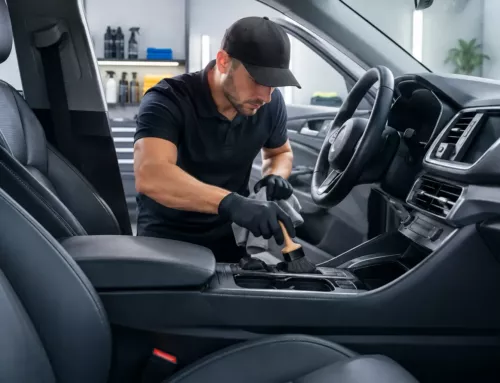
With dust removed, use a soft brush to loosen contamination from air vents, buttons, stitching lines and around infotainment controls. Follow immediately with a clean microfibre cloth to collect what has been lifted. This gives a more refined finish than simply wiping dust from one place to another.
Apply interior cleaner to the cloth rather than spraying directly onto the dashboard. This is especially important around screens, instrument clusters, switches and vents, where excess liquid can travel into places it should not. Wipe in controlled sections, turning the cloth frequently so you are lifting dirt rather than redistributing it.
Aim for a clean, natural appearance. Dashboard dressings that leave a wet shine can create glare on the windscreen and make trim feel greasy. Quality interior valeting focuses on a clean satin finish that looks cared for, not coated.
Treat seats according to their material
Seats are often the most time-consuming part of an interior valet, and the right method depends on the upholstery.
Fabric seats should be vacuumed fully before any stain treatment. Treat a small, inconspicuous area first, then use a fabric cleaner sparingly and work gently with an appropriate brush or cloth. Do not saturate the seat. Over-wetting can lead to long drying times, water marks and unwanted odours, particularly during colder or damp weather.
Leather needs a different approach. Use a dedicated leather cleaner and a soft cloth or brush, paying close attention to bolsters, armrests and the steering wheel, where body oils build up. Once clean and dry, a suitable leather protector can help maintain a supple, natural finish. Avoid harsh degreasers, household wipes and heavy silicone products, which can affect the look and feel of the material.
Alcantara and similar suede-style upholstery require extra restraint. Brushing too aggressively or applying too much liquid can alter the nap. For valuable, delicate or heavily stained interiors, professional attention is usually the safer choice.
Refresh carpets, mats and the boot area
Remove loose mats where possible and vacuum both sides. Rubber mats can be cleaned separately, dried completely and refitted once the carpets beneath are clean. For carpet mats, work methodically from the front edge to the heel pad and around the retaining clips.
Spot-clean stains rather than treating the entire carpet with unnecessary moisture. Coffee, mud and food spills often respond best when dealt with early, but old stains can be more complex. Repeated scrubbing may damage fibres or spread the affected area, so patience is more valuable than force.
Do not overlook the boot. It is frequently used for pushchairs, shopping, sports equipment and dogs, yet is often missed during a quick clean. Vacuum the floor, side pockets, spare-wheel cover area and load lip, then clean any hard trim with the same controlled method used inside the cabin.
Finish glass, mirrors and touchpoints
Interior glass is easiest to clean once all dusty work is complete. Use a dedicated glass cloth and a suitable glass cleaner in light amounts. Wipe one section at a time, then buff with a second dry cloth if required. The inside of the windscreen can be awkward, but it is worth taking time over because smears become obvious in low winter sun and at night.
Finally, revisit the areas touched most often: steering wheel, gear selector, handbrake, door pulls, seat-belt buckles and window switches. These small details make a freshly valeted interior feel complete. Make sure everything is dry before closing the car, particularly around the gear selector, controls and leather surfaces.
Do not hide odours – identify them
A fragrance can make a cabin seem cleaner for a day or two, but it should never be used to disguise an underlying issue. Lingering smells may come from spilled drinks, damp carpets, pet contamination, food residue, a blocked drain or water entering through a seal. If a smell returns after cleaning, investigate the source rather than adding more air freshener.
This is one point where a professional interior valet can be worthwhile. Deep contamination may sit below the visible carpet or within seat foam, and a proper assessment prevents repeated cleaning that does not solve the problem.
Maintain the finish between full valets
Once the cabin is clean, small habits keep it looking that way for longer. Empty rubbish regularly, shake out mats, wipe spills promptly and keep a clean microfibre cloth in the car for dust or fingerprints. A quick vacuum every few weeks is far easier than recovering months of debris from carpets and seat seams.
For owners in New Milton, the New Forest and surrounding Hampshire and Dorset areas, a professional clean is particularly useful before selling a vehicle, after a busy holiday period or when your car no longer reflects the standard you expect. X Studio Car approaches interior presentation with the same care applied to exterior detailing: methodical preparation, appropriate products and attention to the areas other cleaning services can miss.
A well-valeted interior should feel quietly restored rather than artificially perfumed or over-dressed. Give each material the treatment it needs, allow sufficient drying time and the next journey will feel that much better before the engine has even started.