
A clean windscreen and glossy paintwork can make a car look presentable at first glance, but the interior is where everyday use quickly shows. Dust settles into vents, crumbs work their way beneath seats, and skin oils gradually dull high-touch surfaces. Knowing how to valet car interior surfaces properly means treating each material with care, rather than simply spraying and wiping everything in sight.
A quality interior valet is methodical. It removes accumulated soil, refreshes the cabin and leaves the vehicle comfortable to use, without introducing excess moisture or harsh products that can mark delicate trims. Whether you drive a family SUV, a daily commuter, a classic car or a prestige vehicle, the process should be adjusted to the condition and materials inside.
Start with a clear, dry cabin
Before cleaning begins, remove personal belongings, loose mats and anything stored in the door pockets, centre console or boot. This sounds straightforward, but it makes a substantial difference. A proper valet reaches the areas that are normally hidden by bags, children’s items, umbrellas and day-to-day clutter.
Open the doors where practical and work in good light. Interior cleaning is more accurate when dust, staining and marks are visible from the outset. Avoid soaking carpets or seats in an attempt to speed up stain removal. Excess water can leave odours, encourage dampness and create unnecessary drying time, especially in thicker vehicle carpets and heavily padded seats.
The initial dry clean should always come before liquids. Use a suitable vacuum with appropriate attachments to lift loose debris from the carpets, seats, footwells, seams, crevices and luggage area. Move the front seats forwards and backwards to access the runners and rear footwells. A narrow tool is useful around the handbrake, seat bases and console edges, while a soft brush attachment helps protect more delicate surfaces.
How to valet car interior surfaces in the right order
Working from high to low prevents cleaned areas from collecting fresh dust. Begin with the headlining only if it needs attention, then move to upper trim, dashboard, vents, doors, seats, carpets and mats. The headlining requires particular restraint. It is usually lightly bonded to the roof structure, so aggressive brushing or over-wetting can cause sagging or visible water marks.
For dashboard plastics, door cards and centre consoles, use an interior-safe cleaner on a clean microfibre cloth rather than applying product directly onto switches, screens or vents. This gives greater control and reduces the risk of residue collecting around electrical controls. Wipe gently, turning the cloth regularly so that dirt is removed rather than spread across the trim.
A good finish should look clean and natural, not overly glossy. Heavy dressings can leave steering wheels, gear selectors and pedals slippery, while a shiny dashboard may create distracting reflections in the windscreen. The aim is a fresh, even appearance that respects the original finish of the vehicle.
Vents, switches and detailed areas
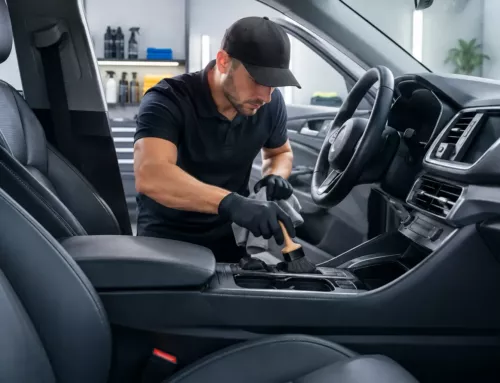
Air vents, stitching, speaker grilles and control buttons are often the most overlooked areas in a quick clean. They are also the places where a carefully valeted interior feels noticeably better. A soft detailing brush and dry or lightly dampened cloth can remove dust from awkward edges without forcing moisture into the controls.
Use a separate, clean cloth for the steering wheel, gear selector, handbrake and door handles. These are high-contact points, so they often hold a build-up that is not immediately obvious. Clean them thoroughly but conservatively, particularly where a steering wheel has leather, Alcantara or a specialised factory finish.
Infotainment screens and instrument displays should be handled with extra care. Never scrub them with a rough cloth or use a product that is not intended for sensitive display surfaces. Light pressure and a clean, soft cloth are usually the right approach for fingerprints and light dust.
Treat fabric, leather and carpets as different jobs
Interior materials respond differently to cleaning. One product and one technique should not be used across every surface, particularly in cars with mixed leather, fabric, piano-black trim, suede-style materials or polished metal details.
Fabric seats and carpets benefit from thorough vacuuming before any targeted cleaning. For a fresh spill, blot it promptly rather than rubbing it deeper into the fibres. Older staining may need a controlled upholstery-cleaning process, with enough extraction and drying time to avoid leaving the material wet beneath the surface. The correct approach depends on the fabric type, stain and how long it has been present.
Leather needs cleaning with a suitable product and a gentle touch. Dirt tends to gather on bolsters, armrests and the driver’s seat, where repeated contact can leave a darker, less even appearance. After cleaning, use an appropriate leather treatment where required to help retain a supple, natural finish. Avoid household cleaners, as they can dry the material or alter its appearance.
Alcantara and similar suede-effect trims deserve specialist care. They can become matted or marked if rubbed too hard or saturated. If these surfaces are heavily soiled, professional interior detailing is often the safer choice, particularly in performance, prestige and classic vehicles where original materials are important to preserve.
Finish the glass, mats and final checks
Interior glass should be cleaned last. Any product residue or dust from earlier stages can otherwise settle on the windscreen again. Use a clean glass cloth and work methodically across the screen, side windows and mirrors. Check from more than one angle, as smears often become visible only when light catches the glass.
Clean the mats separately from the vehicle where possible, then allow them to dry fully before refitting. Rubber mats can be washed and dried carefully, while carpet mats need a deeper vacuum and, if necessary, a controlled fabric-cleaning process. Putting damp mats back into a car undermines the work and may leave the cabin smelling musty.
Before closing the doors, inspect the interior from the driver’s seat and then from outside each door. Look for missed debris along seat rails, dust in door shuts, streaks on screens and uneven areas on trim. Check that seat controls, storage compartments and pedals are dry and free from product residue. These final details are what separate a basic clean from a properly prepared cabin.
When a professional interior valet is worth it
Routine upkeep can keep a reasonably clean car pleasant between appointments, but some interiors need more than a careful vacuum and wipe-down. Persistent odours, pet hair, ground-in food, drink staining, mould concerns, neglected leather and heavily used family vehicles often require deeper cleaning methods and more time than expected.
It is also sensible to call in a professional before selling a vehicle, returning a lease car, collecting a newly purchased used car or preparing a cherished vehicle for an event. The work can be tailored to the vehicle’s size, materials and condition, rather than using a one-size-fits-all approach. At X Studio Car, interior detailing is approached with the same attention to finish and surface protection expected from quality exterior care.
For owners across New Milton, Lymington, Christchurch and the wider Hampshire and Dorset area, a professional interior valet can restore the feeling of getting into a well-kept car every morning. Keep on top of loose debris and fresh spills, then arrange deeper care before everyday wear becomes harder to remove.